
- Anatomy
- Conditions
- Procedures
Direct Anterior Hip Replacement
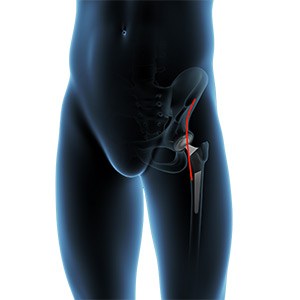
Direct anterior hip replacement is a minimally invasive hip surgery to replace the hip joint without cutting through any muscles or tendons as against traditional hip replacement that involves cutting major muscles to access the hip joint.Anterior hip replacement surgery is performed under general anaesthesia or regional anaesthesia.
Hip Arthroscopy
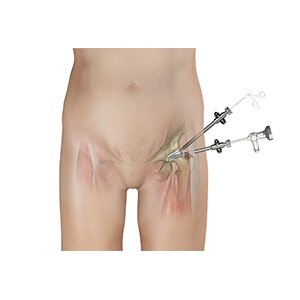
Hip arthroscopy, also referred to as keyhole or minimally invasive surgery, is a procedure in which an arthroscope is inserted into your hip joint to check for any damage and repair it simultaneously.An arthroscope is a small, fibre-optic instrument consisting of a lens, light source, and video camera.
Hip Labral Repair
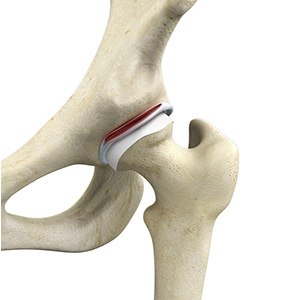
Hip labral repair is a surgical procedure to treat hip labral tears. A hip labral tear is a partial or complete rupture of the hip labrum, a ring of fibrous cartilaginous tissue that surrounds the socket of the hip joint. These tears are most commonly seen in athletes involved in high-impact sports such as ice hockey, soccer, and football and can also occur due to traumatic injury or degenerative conditions.
Hip Reconstruction
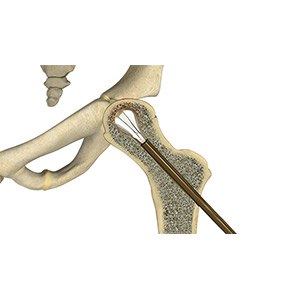
Hip reconstruction is a surgery to repair or replace a damaged hip joint that causes pain and limits your movement.The hip is a ball-and-socket joint; the ball is formed by the head of the humerus (thighbone) and the socket by the pelvic bones.The joint is covered by ligaments that form a capsule around it.
Minimally Invasive Total Hip Replacement
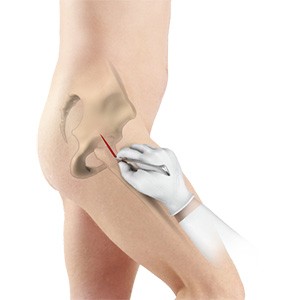
Minimally invasive total hip replacement is a surgical procedure performed through one or two small incisions rather than the single long incision of 10–12-inches as in the traditional approach.The hip joint is one of the body's largest weight-bearing joints and is the point where the thighbone (femur) and pelvis (acetabulum) join.
Nonsurgical Hip Treatments
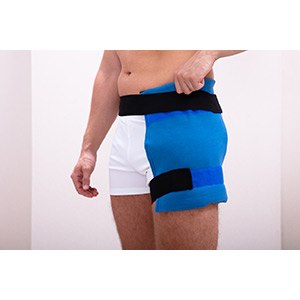
Non-pharmacological interventions may range from simple lifestyle modification or physical exercises and rehabilitation programs.The lifestyle changes resulting in weight loss in obese individuals and doing appropriate physical exercises plays an important role in the prevention and management of hip conditions.
Physical Therapy for Hip
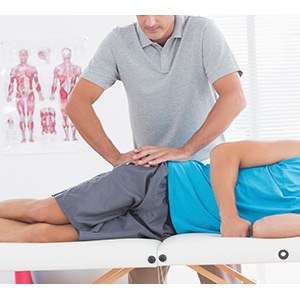
Physical therapy is an exercise program that helps you to improve movement, relieve pain, encourage blood flow for faster healing, and restore your physical function and fitness level. The main aim of physical therapy is to make your daily activities, such as walking, getting in and out of bed and climbing stairs, easier. It can be prescribed as an individual treatment program or combined with other treatments.
Revision Hip Replacement
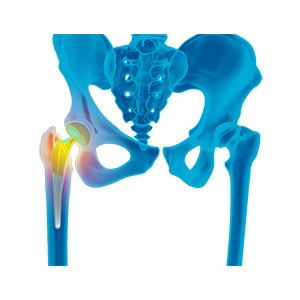
Revision hip replacement is a complex surgical procedure in which all or part of a previously implanted hip joint is replaced with a new artificial hip joint. Total hip replacement surgery is an option to relieve severe arthritis pain that limits your daily activities.
Sciatic Nerve Decompression
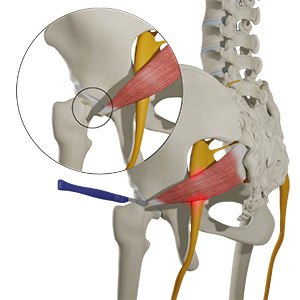
The sciatic nerve is a large nerve that originates in the lower back (lumbar spine), running along the hip and back of the leg and branching off at the knee. The sciatic nerve may become compressed or entrapped along its path resulting in pain and other symptoms.
Total Hip Replacement
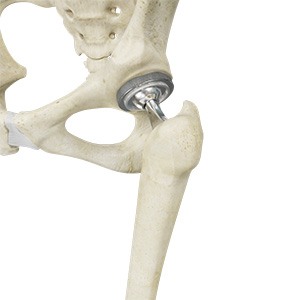
Total hip replacement is a surgical procedure in which the damaged cartilage and bone are removed from the hip joint and replaced with artificial components. The main indication for total hip replacement isarthritis.Arthritis is the inflammation ofjoints, which results in pain, swelling, stiffness and limited movement. Hip arthritis is a common cause of chronic hip pain and disability.