
- Anatomy
- Conditions
- Procedures
Hip Tendonitis
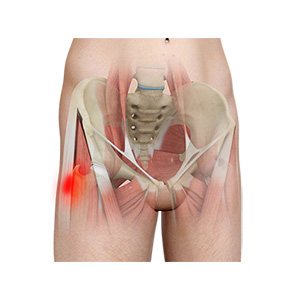
Tendons are strong connective tissue structures that connect muscle to bone. Hip tendonitis is a condition associated with degeneration of the hip tendons. This condition is mainly caused due to strain on the tendons which may occur due to overuse or biomechanical problems.
Hip Bursitis
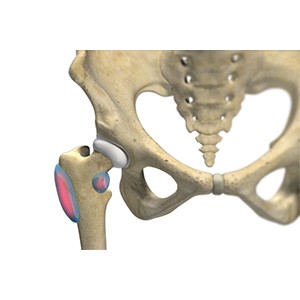
Hip bursitis is a painful condition caused by the inflammation of a bursa in the hip. Bursae are fluid-filled sacs present in the joints between bone and soft tissue to reduce friction and provide cushioning during movement.The bony prominence of the hip is called greater trochanter and is present on the outer side of the upper thighbone or femur. The bursa overlying it is called trochanteric bursa.
Hip Fracture

A hip fracture is a break that occurs near the hip in the upper part of the femur or thighbone. The thighbone has two bony processes on the upper part - the greater and lesser trochanters. The lesser trochanter projects from the base of the femoral neck on the back of the thighbone.
Gluteal Strain
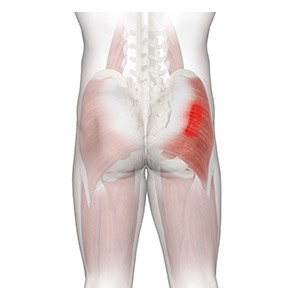
A gluteal strain is a condition characterized by a partial or complete tear of the gluteus muscles, also known as the buttocks. The gluteus muscles are a group of strong muscles present at the back of the pelvis. These muscles help with the movement and stabilization of the hip joint.
Chondral Lesions or Injuries of the Hip
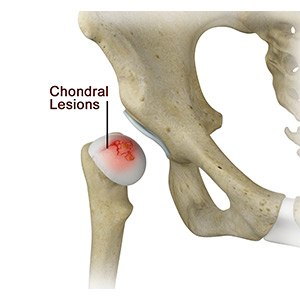
The hip joint is one of the largest weight-bearing joints in the body, formed by the thighbone (femur) and the acetabulum of the pelvis. It is a ball and socket joint with the head of the femur as the ball and the pelvic acetabulum forming the socket.The joint surface is covered by a smooth articular cartilage, which acts as a cushion and enables smooth movements of the joint.
Hip Instability
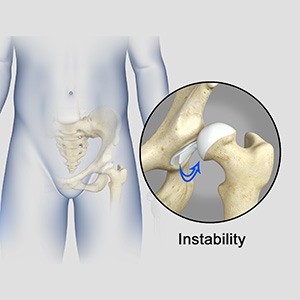
Hip instability can be traumatic or atraumatic. Traumatic instability can be caused by injuries from sports or motor vehicle accidents. These injuries can damage the bony structures, labrum, and cartilage of the hip joint and form loose bodies. It can range from severe dislocation to a simple subluxation (partial displacement) of the hip joint.
Hip Labral Tear
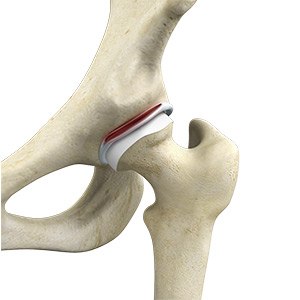
The hip joint is a ball and socket joint in which the head of the femur is the ball and the acetabulum forms the socket. The labrum helps to deepen the socket and provide stability to the joint. It also acts as a cushion and enables smooth movement of the joint. A hip labral tear is an injury to the labrum, the cartilage that surrounds the outside rim of your hip joint socket.
Irritable Hip
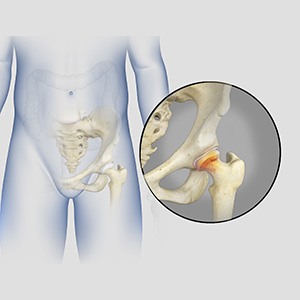
Irritable hip, also known as acute transient synovitis, is a common disorder of childhood characterized by hip pain and limping. The term transient means that it does not last long. It usually occurs before puberty and affects only one hip. Boys aged between 4 to 10 years are most often affected.
Sciatic Nerve Compression
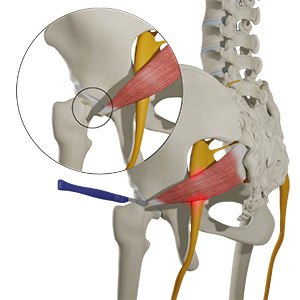
The sciatic nerve is a large nerve that originates in the lumbar spine or lower back, running along the hip and back of the leg and branching off at the knee. It is made up of 5 sets of paired nerve roots located in the lumbar spine that combine to form a left and right sciatic nerve. Compression or damage of this nerve as a result of an underlying medical condition is defined as sciatic nerve compression.
Stress Fractures of the Hip
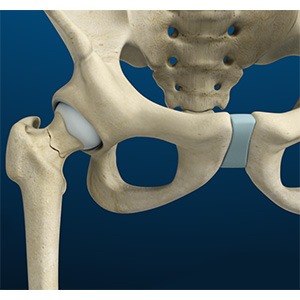
Stress fractures of the hip are a break in the upper part of the thigh bone (femur) that fits into the socket of the hip joint. It can occur in any part of the hip, however, it mostly occurs just below the ball of the ball-and-socket hip joint called the femoral neck.